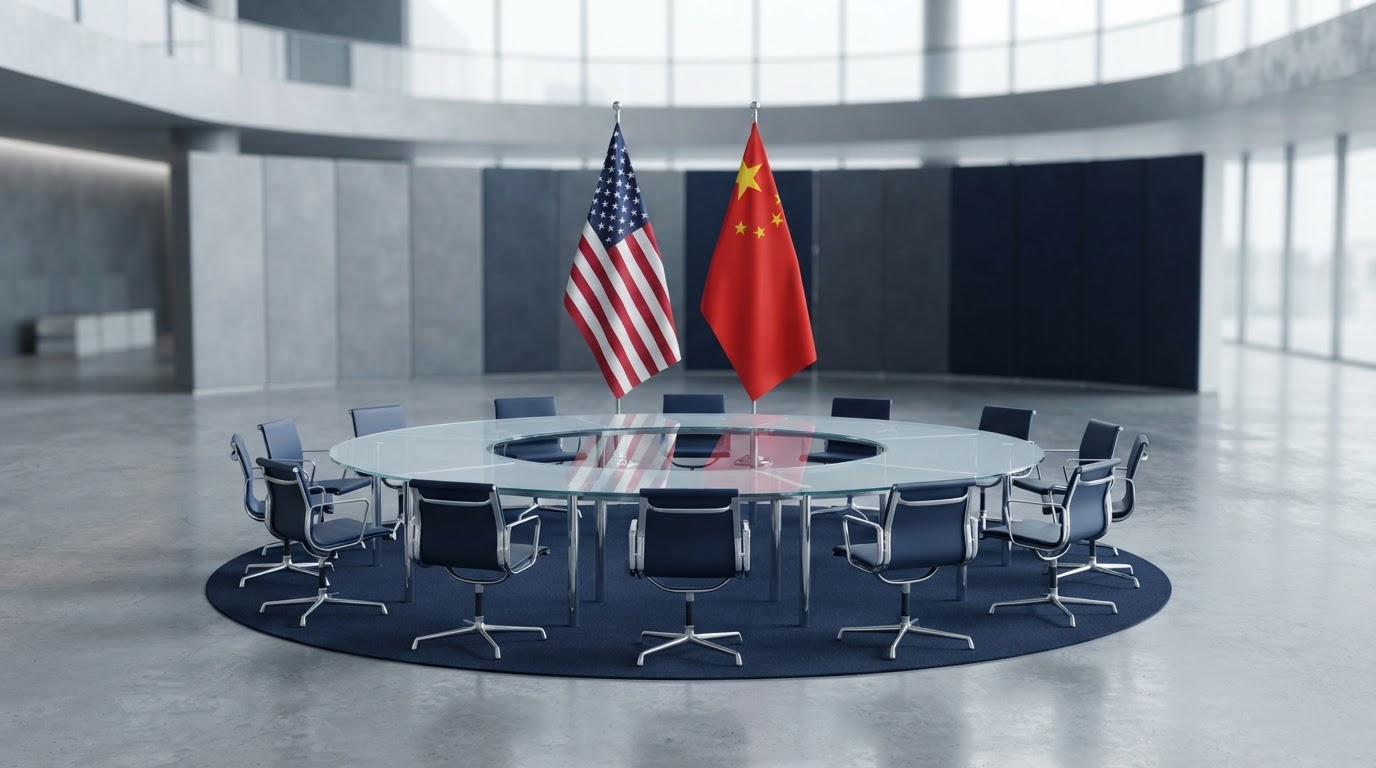
US President Donald Trump and Chinese President Xi Jinping concluded bilateral summit talks without establishing any sweeping agreements or new regulatory frameworks for artificial intelligence. Despite the attendance of prominent tech leaders—including OpenAI’s Sam Altman, Nvidia’s Jensen Huang, Alphabet’s Sundar Pichai, Elon Musk, and Jeff Bezos—the meeting focused primarily on diplomatic rhetoric rather than concrete policy updates.
Divergent Visions for Industry Governance
President Trump reiterated his preference for a light-touch regulatory environment, arguing that the United States must maintain rapid technological progress. During the discussions, Trump proposed renaming artificial intelligence to "SUPER INTELLIGENCE" (SI), claiming that Xi and other attendees agreed with the terminology shift. Trump also asserted that China shares his stance on keeping current regulatory levels intact.
In contrast, President Xi Jinping emphasized that increasingly powerful AI systems must stay strictly "under human control." While Xi did not endorse specific international frameworks, his comments highlighted Beijing's emphasis on state oversight and risk containment, contrasting with Washington's focus on speed and market competitiveness. This follows broader domestic legislative efforts, including previous AI governance summits held between US officials and industry leaders.
Security Proposals and Semiconductor Restrictions
Prior to the executive meeting, US Treasury Secretary Scott Bessent advanced a proposal during preparatory discussions with Chinese Vice Premier He Lifeng. Bessent suggested establishing a bilateral AI dialogue that includes a notification protocol for major security incidents involving critical infrastructure or military systems. However, the leaders did not formalize this notification mechanism into an official treaty.
Furthermore, the summit resulted in no changes to high-end semiconductor trade policies. US chip export controls remain central to Washington's strategy to limit China's access to advanced computing infrastructure, but officials confirmed that export restrictions were not negotiated during the economic sessions.
Key details from the summit include:
- No formal regulatory limits: Neither country agreed to new caps or international supervisory bodies for AI development.
- Bilateral dialogue proposed: US Treasury Secretary Scott Bessent floated a national security incident notification mechanism with Vice Premier He Lifeng.
- Semiconductor policy unchanged: High-end chip export controls were excluded from prep talks and remained unaffected.
- Tech leadership present: Executives from OpenAI, Nvidia, Alphabet, Tesla, and Amazon attended the summit context.
Why It Matters
The lack of a binding accord highlights how strategic competition between the US and China prevents the formation of global AI guardrails. While both nations acknowledge the systemic risks associated with super-intelligent systems, their competing priorities—American technological speed versus Chinese state control—will likely keep global regulation fragmented. Investors and technology firms should expect existing US semiconductor export controls to remain in full effect without near-term diplomatic relief.