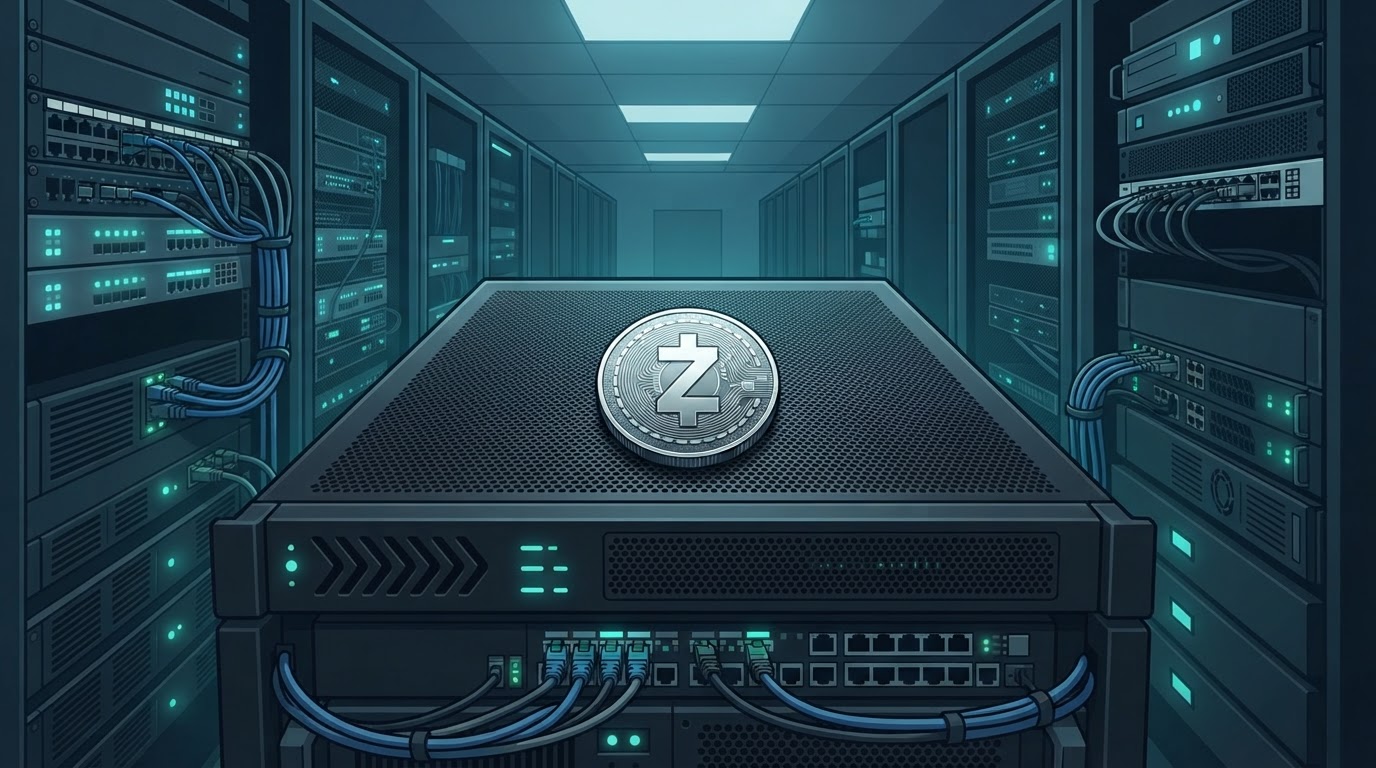
Private Key Vulnerabilities Account for 40% of Crypto's $16 Billion Hack Losses, Says Pharos CEO
Private key vulnerabilities, not smart contracts, are responsible for 40% of the $16 billion in crypto hack losses.

◆ Top story // Markets
BNY Mellon has integrated USDC minting and redemption services into its institutional custody platform, deepening its partnership with Circle.

Private key vulnerabilities, not smart contracts, are responsible for 40% of the $16 billion in crypto hack losses.

White House officials are engaging with law enforcement groups to address concerns regarding illicit-finance provisions within the proposed Crypto's Clarity Act.

J.P. Morgan has expanded its Kinexys blockchain platform, adding five Asia-Pacific currencies to enable 24/7 settlement for institutional clients.

Blockchain analytics firm Chainalysis has proposed a new ontology to standardize how investigators identify and link clusters of cryptocurrency addresses.

The EU's landmark MiCA regulation, fully effective July 1, could impact 10 million crypto users as platforms brace for tightening oversight.

Ripple's new proposed XRPL standard would allow institutions to borrow against tokenized assets, with blockchain enforcing loan terms.

The emergence of AI models like Claude Mythos has sparked discussions regarding the potential for AI-driven attacks on DeFi protocols, but these same tools are also available for defense.

BNY Mellon, the world's largest custody bank, is expanding its stablecoin services to institutional clients, starting with Circle's USDC custody and minting.

MicroStrategy can now sell Bitcoin to fund its USD reserve, support preferred dividends, and finance up to $2 billion in stock buybacks.

Ukraine has successfully transferred $8.3 million in seized cryptocurrency, recovered from an international hacker group involved in money laundering.

BlackRock has integrated Ethena into its risk management platform and established a $100 million liquidity facility for its tokenized money market fund.

A growing trend sees former crypto skeptics shifting their stance, drawn by the significant financial opportunities within the blockchain sector.

MicroStrategy, led by Michael Saylor, unveiled a new capital framework allowing Bitcoin sales to fund dividends, a $2.55B reserve, and a 12% STRC payout.

Breez's new SDK feature allows users to make payments with Bitcoin, enabling recipients to receive USDC and USDT across over 30 blockchains without holding stablecoins.

Bernstein suggests prediction market platforms Kalshi and Polymarket could become M&A targets as operational consolidation blurs lines between exchanges and sportsbooks.

Bitmine acquired $43 million in Ethereum, its smallest purchase since early May, as Tom Lee blamed broader crypto weakness on quarter-end "window dressing."

JPMorgan has observed limited institutional demand for crypto perpetual futures, noting these products are primarily used for speculative trading rather than hedging.

MicroStrategy has authorized up to $2 billion in share buybacks and established a program allowing future bitcoin sales for liquidity.

Tether's USDT stablecoin recently traded at an 8.5% premium in India, double the usual gap, after regulatory raids disrupted its supply.

Ethereum co-founder Vitalik Buterin highlights indistinguishability obfuscation as crypto's most powerful idea, despite it being too slow for real-world use.

CoinDesk's June 29, 2026, outlook suggests that current U.S. Dollar and Treasury yield market positions could offer a glimmer of hope for Bitcoin.

Institutional banking provider FundBank has rebranded as IRACE Digital, expanding into digital asset custody, liquidity, and execution under former Zodia Custody CEO John Cronin.

Bernstein analysts indicate that prediction market platforms consolidating core operations could lead to M&A and increased antitrust and regulatory scrutiny.

Bitcoin's **RSI divergence** at the Q2 and June close has analysts comparing the **$60,000** level to the **$30,000** mark during the **2022 bear market**.

Bitcoin advocate Samson Mow has declared that Bitcoin's price bottom has been reached, attributing it to a change in the traditional four-year halving cycle.

Asset manager Fidelity has firmly rejected claims that Bitcoin's network security is undermined by its fixed supply schedule and halving events.

Ethereum co-founder Vitalik Buterin highlights indistinguishability obfuscation as crypto's most powerful idea, despite it being too slow for real-world use.

Vitalik Buterin stated that indistinguishability obfuscation could enable private, collusion-resistant onchain voting without trusted committees.

Cryptocurrency firm Sharplink acquired nearly 40,000 ETH, valued at approximately $62.4 million, last week, ending an eight-month pause.

Pioneering **zk-rollup** project **Loopring** has announced the closure of its decentralized exchange (DEX), citing a significant **lack of adoption**.

A post-mortem report revealed a "race condition" after a system reset caused Base's second recent outage, preventing sequencers from catching up.

DCG-backed Yuma launched a new fund providing institutional investors with exposure to Bittensor (TAO) amid rising decentralized AI interest.

Ripple's new proposed XRPL standard would allow institutions to borrow against tokenized assets, with blockchain enforcing loan terms.

The emergence of AI models like Claude Mythos has sparked discussions regarding the potential for AI-driven attacks on DeFi protocols, but these same tools are also available for defense.

BlackRock has integrated Ethena into its risk management platform and established a $100 million liquidity facility for its tokenized money market fund.

NFT brand Pudgy Penguins is launching its new Vibes Series 3 trading cards in Target stores nationwide, marking a significant expansion into mainstream retail.

The popular NFT project Pudgy Penguins has announced the closure of its mobile battle royale game, Pudgy Party, shifting focus to its immersive Pudgy World experience.

Pudgy Penguins is halting development of its mobile game, Pudgy Party, to concentrate resources on its immersive virtual world, Pudgy World.

White House officials are engaging with law enforcement groups to address concerns regarding illicit-finance provisions within the proposed Crypto's Clarity Act.

Blockchain analytics firm Chainalysis has proposed a new ontology to standardize how investigators identify and link clusters of cryptocurrency addresses.

The EU's landmark MiCA regulation, fully effective July 1, could impact 10 million crypto users as platforms brace for tightening oversight.

BNY Mellon has integrated USDC minting and redemption services into its institutional custody platform, deepening its partnership with Circle.

Private key vulnerabilities, not smart contracts, are responsible for 40% of the $16 billion in crypto hack losses.

J.P. Morgan has expanded its Kinexys blockchain platform, adding five Asia-Pacific currencies to enable 24/7 settlement for institutional clients.