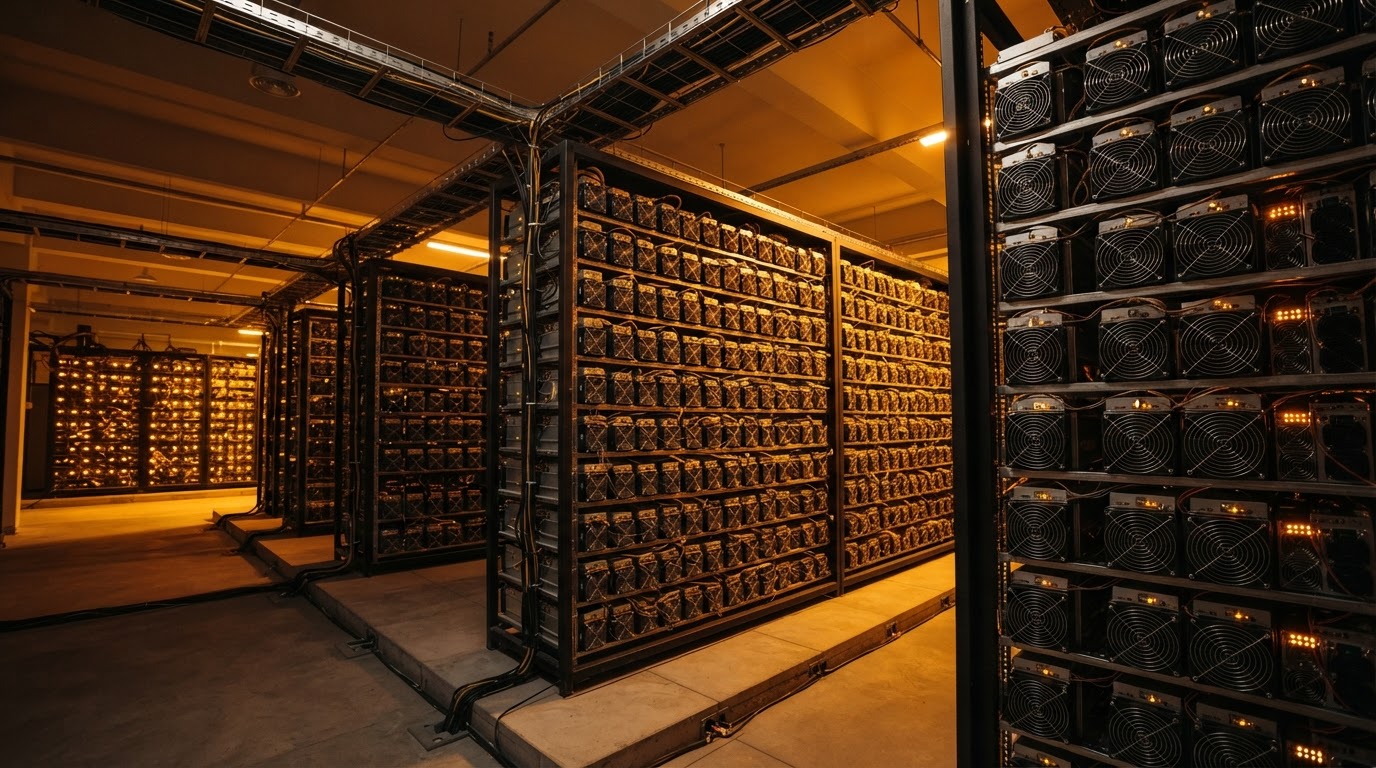
Bitcoin (BTC) network hash rate has rebounded to roughly 1.06 zettahashes per second (ZH/s), pulling within 6.5% of its all-time high despite several large public mining companies diverting power capacity to artificial intelligence (AI) infrastructure.
Data from Glassnode shows the 14-day moving average of hash rate previously peaked near 1.135 ZH/s in late 2025 before dropping 22% to stall near 870 exahashes per second (EH/s) in February 2026. After retesting that floor in June and August, the metric turned sharply upward. Meanwhile, BTC trades at $79,774, down 0.8% over 24 hours and about 37% below its $126,210 record peak, even as Bitcoin clings to $80,000 support.
Network Difficulty Surges Toward Record Highs
Bitcoin's mining difficulty is matching the compute rebound. On October 16, the network increased difficulty by 5.92% to 140.58 trillion (T). Analysts project another 5% to 6% adjustment on October 29, which would push difficulty to between 148T and 150T—just 4% to 5% below the record peak of 155.97T set in late October 2025. This marks a sharp reversal from June, when difficulty dropped 10.09% to a 2026 low of 124.93T.
Hashprice has also recovered slightly to approximately $36 per petahash per day (PH/day), up from $30–$32 per PH/day recorded on August 5, when BTC was priced at $64,078 and difficulty stood at 126.23T.
Private Operators and Offshore Hash Rate Replace Public Miners
The hash rate resilience comes despite public operators shifting resources to high-performance computing (HPC). IREN plans to retire 23.2 EH/s of Bitcoin mining capacity by December 31 following a multiyear cloud agreement with Anthropic. This follows Riot Platforms signing a 20-year, 191-megawatt (MW) hosting deal worth $9.1 billion (up to $16.1 billion with extensions) at its Rockdale, Texas campus on August 10, also linked to AI clients amid Anthropic's massive capital commitments. Public miners' realized hash rate fell 15% in the first half of 2026 as total disclosed AI contracts topped $70 billion, though CoinShares notes only $1.1 billion is currently billed annually.
Private operators and fast-growing international regions are filling the deficit. Bitdeer expanded its self-mining hash rate to 82.3 EH/s in September, up from 35 EH/s a year prior. Hashrate Index data shows first-quarter hash rate expanded 129% year-over-year in Ethiopia, 54% in Paraguay, and 28% in Oman. Furthermore, Texas grid fleets resumed operations following the end of summer peak demand on September 12.
Key Takeaways
- Hash Rate Recovery: The 14-day moving average reached 1.06 ZH/s, hovering 6.5% below its record peak.
- Difficulty Adjustments: Following a 5.92% jump to 140.58T, a second consecutive increase of 5% to 6% is expected on October 29.
- Public AI Pivot: IREN is shutting down 23.2 EH/s of capacity, while public miner AI contracts exceed $70 billion total.
- Global Expansion: Hash rate growth in Ethiopia (+129%), Paraguay (+54%), and Oman (+28%) is offsetting public miner retirements.
Why It Matters
The hash rate recovery demonstrates structural resilience in Bitcoin's security budget as compute capacity redistributes globally. While publicly traded North American miners reallocate power to high-margin AI contracts, private entities and low-cost international jurisdictions are absorbing discounted hardware. This geographic dispersion strengthens network security against regional grid shocks, proving that Bitcoin's security model is not dependent on public corporate miners.