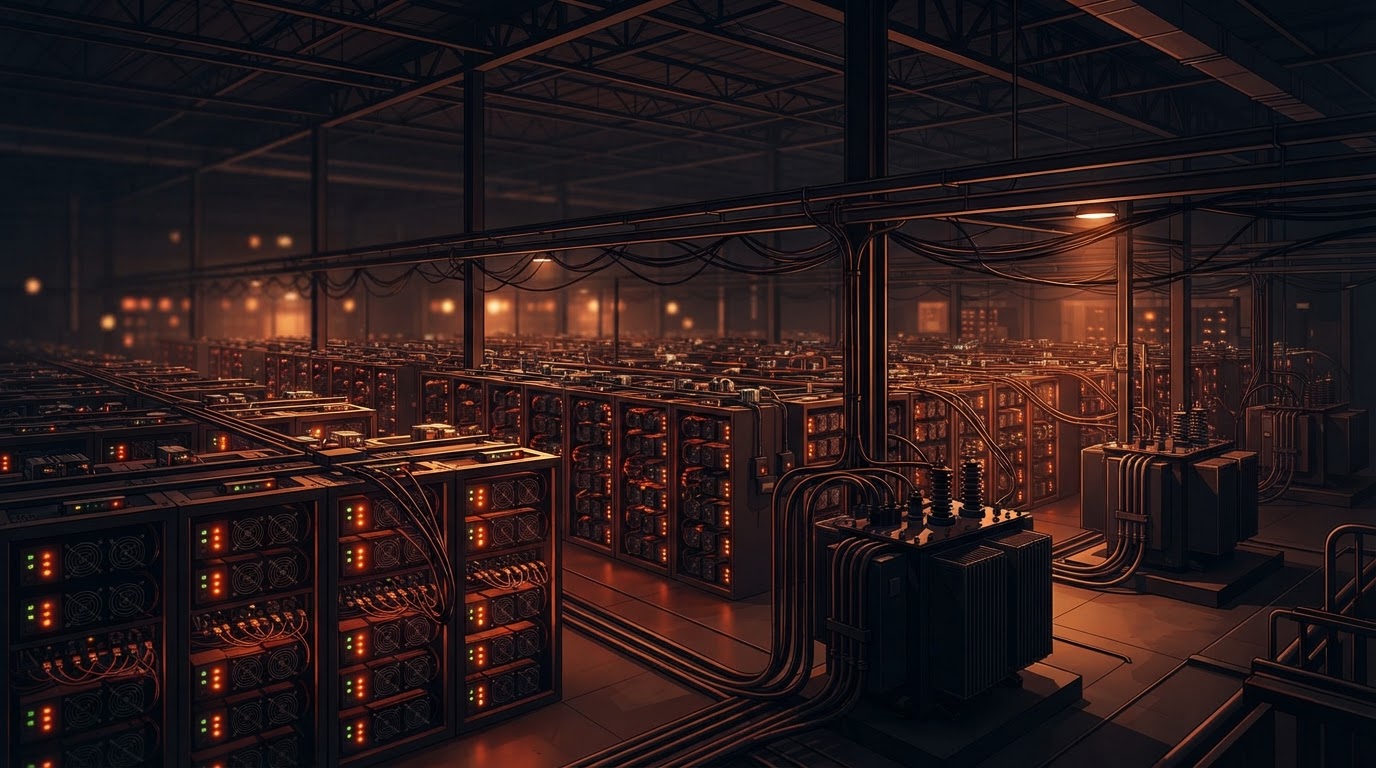
Frank Holmes, Executive Chairman of HIVE Digital Technologies, has outlined why Bitcoin mining facilities represent "tier one" data center infrastructure as artificial intelligence demand surges, arguing that global fiat debasement will continue to drive capital into Bitcoin and gold. Speaking in a recent interview, Holmes highlighted how electrical substations and power capacity in locations spanning from Paraguay to Canada position miners to dominate high-performance computing.
Mining Facilities Pivot to AI Compute
Holmes explained that HIVE Digital Technologies originally utilized graphics processing units for Ethereum mining before transitioning those assets into artificial intelligence compute tasks. Mining sites inherently possess three fundamental prerequisites for modern AI factories: substantial power contracts, land, and high-voltage substations. As processing requirements grow, compute capacity has evolved into a key commodity, driving broader market innovations like AI compute derivatives to hedge GPU price volatility.
Global Monetary Expansion and Hard Assets
Examining macroeconomic conditions, Holmes highlighted the $40 trillion created during COVID-19 stimulus measures and estimated the global money supply at $350 trillion, warning that central banks could print another $100 trillion. He pointed to China's $1.4 trillion in credit expansion and sustained central bank gold purchases as indicators of fiat currency debasement. Institutional financial products like spot ETFs have shifted Bitcoin from a speculative market into a fundamental portfolio asset, echoing arguments from investors who advocate holding Bitcoin and gold as inflation insurance.
Key Takeaways
- HIVE Digital Technologies classifies Bitcoin mining sites as "tier one" infrastructure for AI compute expansion in Canada and Paraguay.
- Frank Holmes pointed to a $350 trillion global money supply and $40 trillion in pandemic-era stimulus as catalysts for sovereign debt inflation.
- Central bank reserve accumulation and China's $1.4 trillion lending drive underscore systemic risks in fiat currencies.
Why It Matters
The integration of AI workloads into Bitcoin mining operations provides operators with dual revenue models, dampening their exposure to crypto price cycles and halving events. As sovereign debt levels escalate worldwide, repurposing energy infrastructure for high-performance computing secures long-term cash flow for major miners. Market participants will be watching whether energy regulators in key mining hubs restrict grid allocations as dual AI and mining power consumption grows.