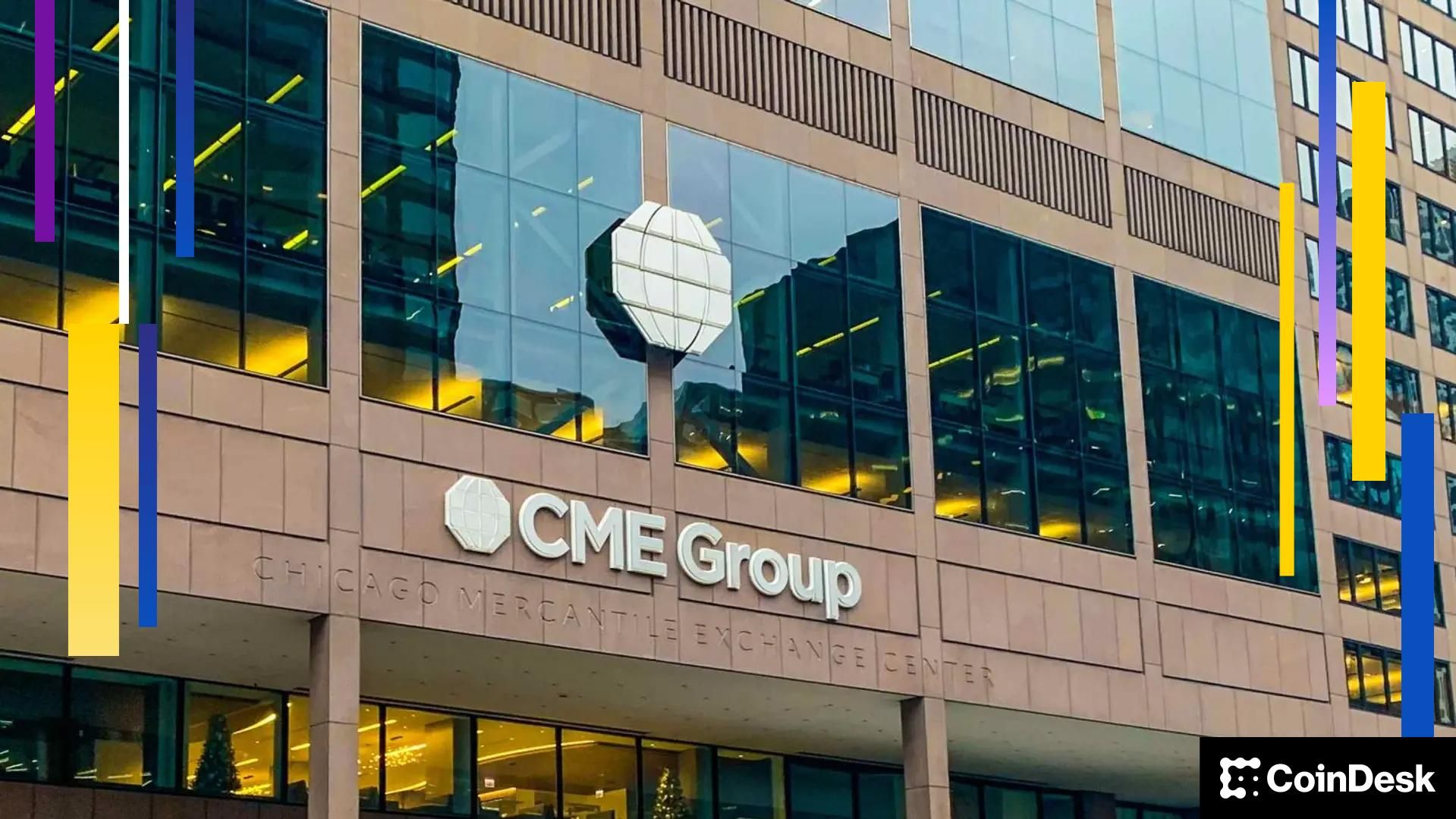
The Chicago Mercantile Exchange (CME) has introduced a new way for institutional investors to engage with Bitcoin, launching futures contracts that allow trading on its volatility rather than its direct price. This development marks a significant step in the maturation of cryptocurrency derivatives markets.
Traditionally, investors seeking exposure to Bitcoin on regulated exchanges have focused on futures contracts tied to its spot price. However, CME's latest offering, based on the CME CF Bitcoin Real-Time Volatility Index (BVOL), provides a distinct avenue. This index measures the implied volatility of Bitcoin, reflecting market expectations of how much the price will fluctuate over a specific period.
Two prominent trading firms, Monarq and DV Chain, were among the first to participate in these new futures contracts. Their early engagement highlights institutional interest in sophisticated tools for managing risk and speculating on market movements without taking a direct directional bet on Bitcoin's price.
Understanding Bitcoin Volatility Futures
These new futures contracts are designed to allow traders to speculate on the expected future price swings of Bitcoin. For instance, if a trader believes Bitcoin's price will become more erratic, they might buy volatility futures. Conversely, if they anticipate a period of calm, they could sell them. This differs fundamentally from traditional Bitcoin futures, which are about predicting whether the price will go up or down.
The introduction of such a product by a major regulated exchange like CME underscores the increasing sophistication of the crypto derivatives landscape. It offers a new layer of financial engineering for institutional players, enabling more nuanced strategies for hedging and speculation. Such instruments can help professional traders manage their portfolios more effectively in a volatile asset class.
Market Implications and Institutional Interest
The launch of these volatility futures could attract a new segment of institutional capital to the crypto market. Firms that are wary of direct price exposure but are comfortable with complex derivatives can now gain indirect exposure to Bitcoin's market dynamics. This move by CME follows a trend of traditional financial institutions offering more varied crypto-related products, as seen with recent developments in Bitcoin institutional sentiment.
The availability of volatility futures also provides valuable tools for risk management. For example, a fund holding a large amount of Bitcoin might use these futures to hedge against sudden, large price movements, even if they don't expect the price to drop significantly. This could lead to more stable and predictable institutional engagement with Bitcoin.
Key Takeaways
- CME launched futures contracts for Bitcoin volatility, not its price.
- These contracts are based on the CME CF Bitcoin Real-Time Volatility Index (BVOL).
- Monarq and DV Chain were early participants.
- The product allows speculation on future price swings, offering new hedging and trading strategies.
- It signifies growing institutional interest and market maturation.
This development could further bridge the gap between traditional finance and the crypto ecosystem. As more sophisticated financial instruments become available, it paves the way for greater institutional adoption and potentially more stable market structures. The expansion of offerings on regulated exchanges like CME reflects a broader trend of integrating digital assets into the mainstream financial system, much like the ongoing discussions around new crypto tax legislation.