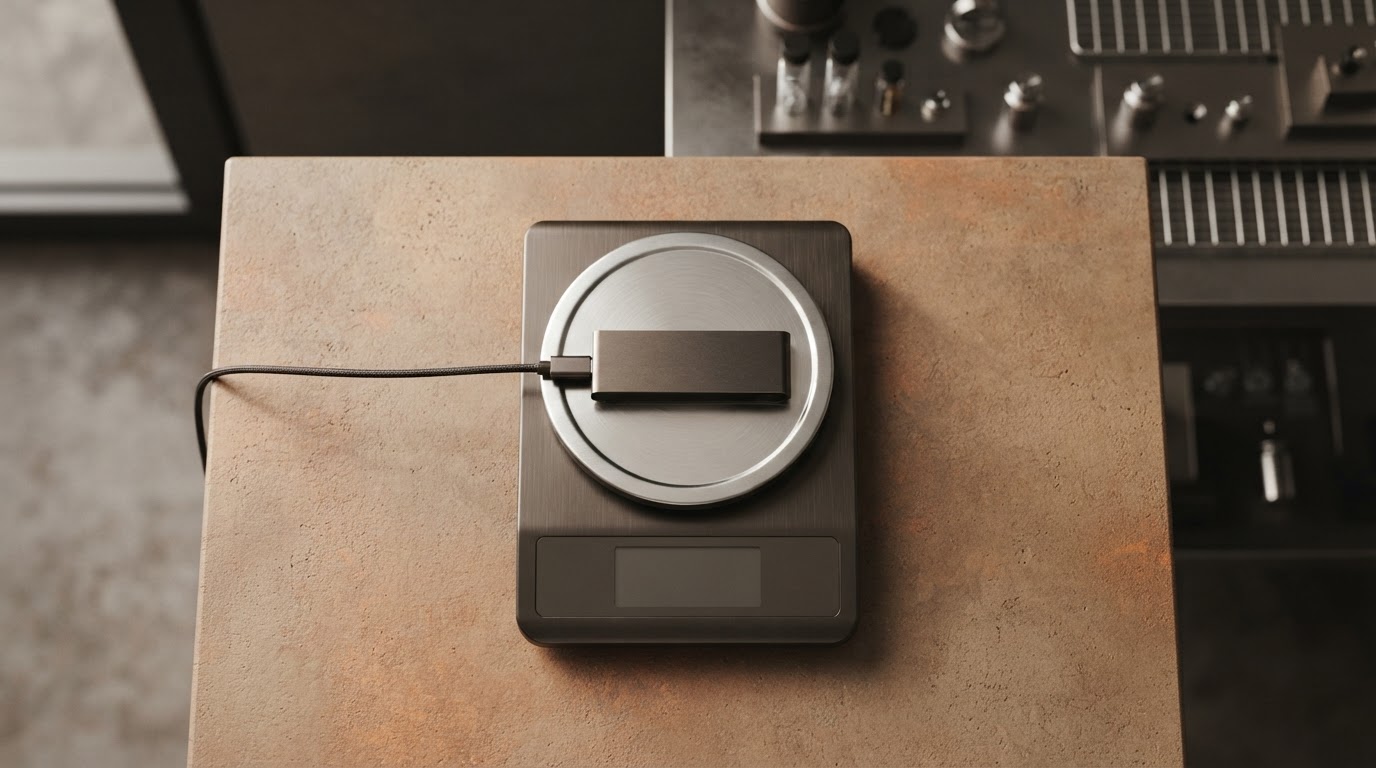
Crypto investors are turning to kitchen scales to detect hardware wallet tampering following a scandal linked to $93 million in reported cryptocurrency thefts, though security researchers warn that basic weight checks offer limited protection. The trend gained momentum after Ledger confirmed a hidden hardware implant inside a Nano X device sold through CryptoBilis, an official reseller operating in Southeast Asia, following earlier revelations that suspected wallet losses reached $93.2 million.
How the Hardware Implant Evaded Detection
Former Mt. Gox CEO Mark Karpelès uncovered a hidden spy setup inside a factory-sealed Ledger Nano X purchased in Malaysia. The modified hardware contained an extra circuit board, an antenna, and a cellular modem designed to capture recovery seed phrases directly off the screen and transmit them over a cellular network. To fit the rogue components inside the casing, attackers replaced the original battery with a smaller unit, leaving the total mass difference at approximately 1 gram.
Standard manufacturer specifications list the Ledger Nano X at 34 grams and the Trezor Safe 3 at 14 grams. However, Karpelès noted in an October 11, 2026 public statement that normal manufacturing variances—such as minor weight differences between batteries of identical capacity—can easily obscure a 1-gram disparity. Consequently, consumer kitchen scales measuring in single-gram increments cannot reliably distinguish between normal factory variance and a sophisticated physical compromise.
Key Takeaways
- Ledger confirmed a compromised Nano X unit sold through authorized reseller CryptoBilis after malicious hardware was detected.
- Former Mt. Gox CEO Mark Karpelès discovered an extra circuit board, cellular modem, and antenna inside a unit bought in Malaysia.
- Attackers swapped the device battery for a smaller model, leaving a net weight difference of just 1 gram.
- Ledger has paused reseller sales and instructed recent CryptoBilis customers to skip setting up their devices entirely.
Why It Matters
This incident highlights a critical shift in cryptocurrency security risks from software-based exploits to physical supply chain attacks. As malicious actors demonstrate the capability to intercept and modify sealed hardware devices without significantly altering their mass or visual appearance, physical inspection tools like consumer scales prove insufficient. Investors must rely on strict supply chain integrity, direct manufacturer purchasing, and cryptographic attestation protocols rather than manual home testing methods.