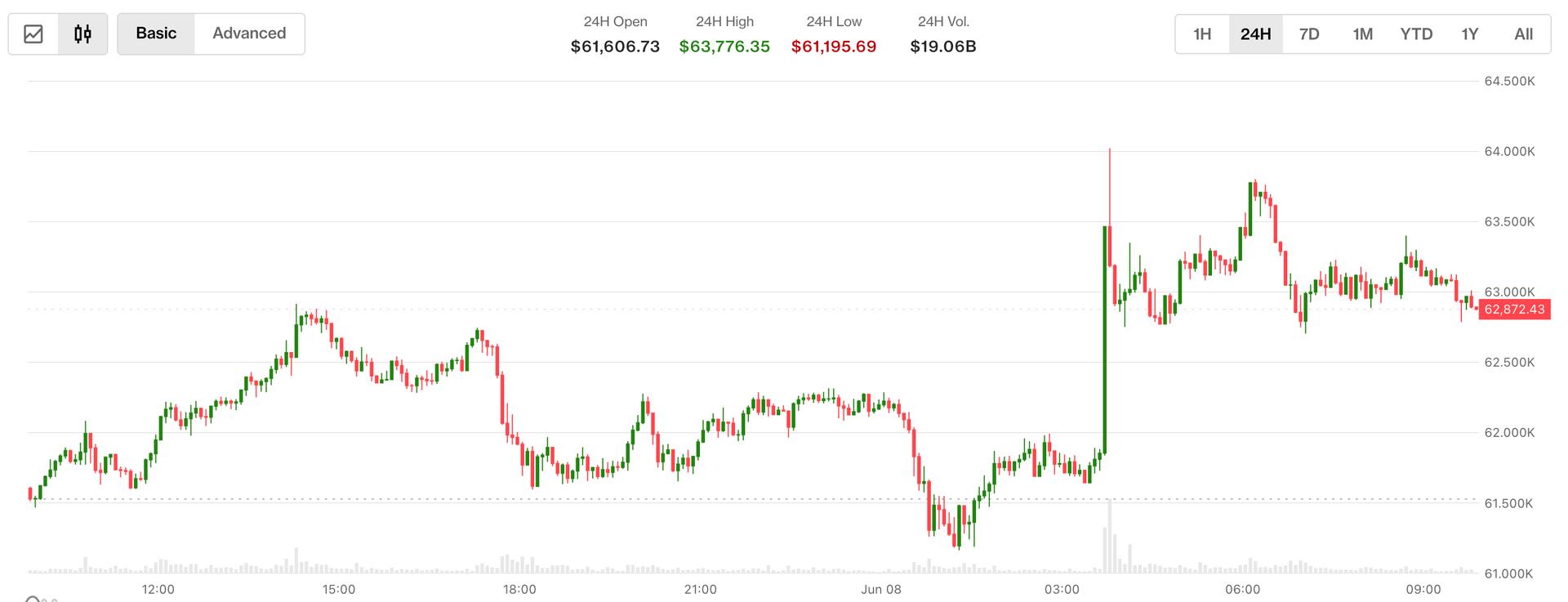
Bitcoin experienced a notable pullback, dropping below the $63,000 mark, as heightened geopolitical tensions between Iran and Israel sent ripples of uncertainty throughout global financial markets. This shift in risk sentiment prompted investors to move away from riskier assets, impacting cryptocurrencies and traditional markets alike.
The cryptocurrency, which had shown some resilience, succumbed to the broader market anxiety. The escalation in the Middle East has historically led to volatility in global economies, and this instance proved no different, with Bitcoin's price reacting swiftly to the developing situation.
Geopolitical Headwinds Impact Crypto
The ongoing conflict between Iran and Israel has been a significant driver of the recent market downturn. Such events often lead to a 'risk-off' environment where investors prioritize stability over potential growth. This sentiment typically favors safe-haven assets like gold, while assets perceived as more volatile, including cryptocurrencies, tend to face selling pressure. The immediate impact was seen in rising oil prices, a classic indicator of geopolitical stress, and a subsequent sell-off in equity markets.
Even though Bitcoin is often touted as a decentralized asset, it is not entirely immune to global macroeconomic and geopolitical forces. Its performance frequently shows correlation with traditional equities, especially during periods of high uncertainty. This recent decline illustrates how quickly external factors can influence the digital asset landscape, challenging narratives of complete decoupling from traditional finance. For insights into broader market movements affecting crypto, see our analysis on multiple factors driving Bitcoin's recent price dip.
Broader Market Contagion
The impact of these geopolitical events wasn't confined to the crypto space. Reports indicated a significant crash in Korean stock markets, signaling a widespread retreat from risk across various regions. This cascading effect underscores the interconnectedness of global financial systems, where a crisis in one part of the world can quickly trigger reactions elsewhere. The fear of broader economic instability often leads to investors consolidating their portfolios, which can result in outflows from speculative assets.
The cryptocurrency market, therefore, finds itself navigating a complex environment where traditional market dynamics play a crucial role. The volatility witnessed in Bitcoin's price reflects a cautious investor base, closely monitoring international developments and their potential economic repercussions. This period of uncertainty highlights the importance of understanding macro trends when evaluating crypto asset performance. Our recent piece on Bitcoin at $60,000 discusses how institutional sentiment can shift during such periods.
Key Market Observations
- Bitcoin (BTC) price dropped below $63,000, reflecting a broader market downturn.
- Escalating geopolitical tensions between Iran and Israel were identified as the primary catalyst.
- Global financial markets experienced a risk-off sentiment, pushing investors towards safer assets.
- Traditional markets, including Korean stocks and oil prices, also reacted significantly.
- The event underscores the continued influence of macroeconomic and geopolitical factors on cryptocurrency valuations.
As global events continue to unfold, market participants will be closely watching for any signs of de-escalation or further intensification. The crypto market's resilience and recovery will largely depend on a stabilization of the geopolitical landscape and a return of investor confidence. The current situation serves as a reminder of the inherent volatility and external dependencies that even a leading digital asset like Bitcoin faces. The broader market experienced a significant downturn, as detailed in our report on how the crypto market plummeted $390 billion.