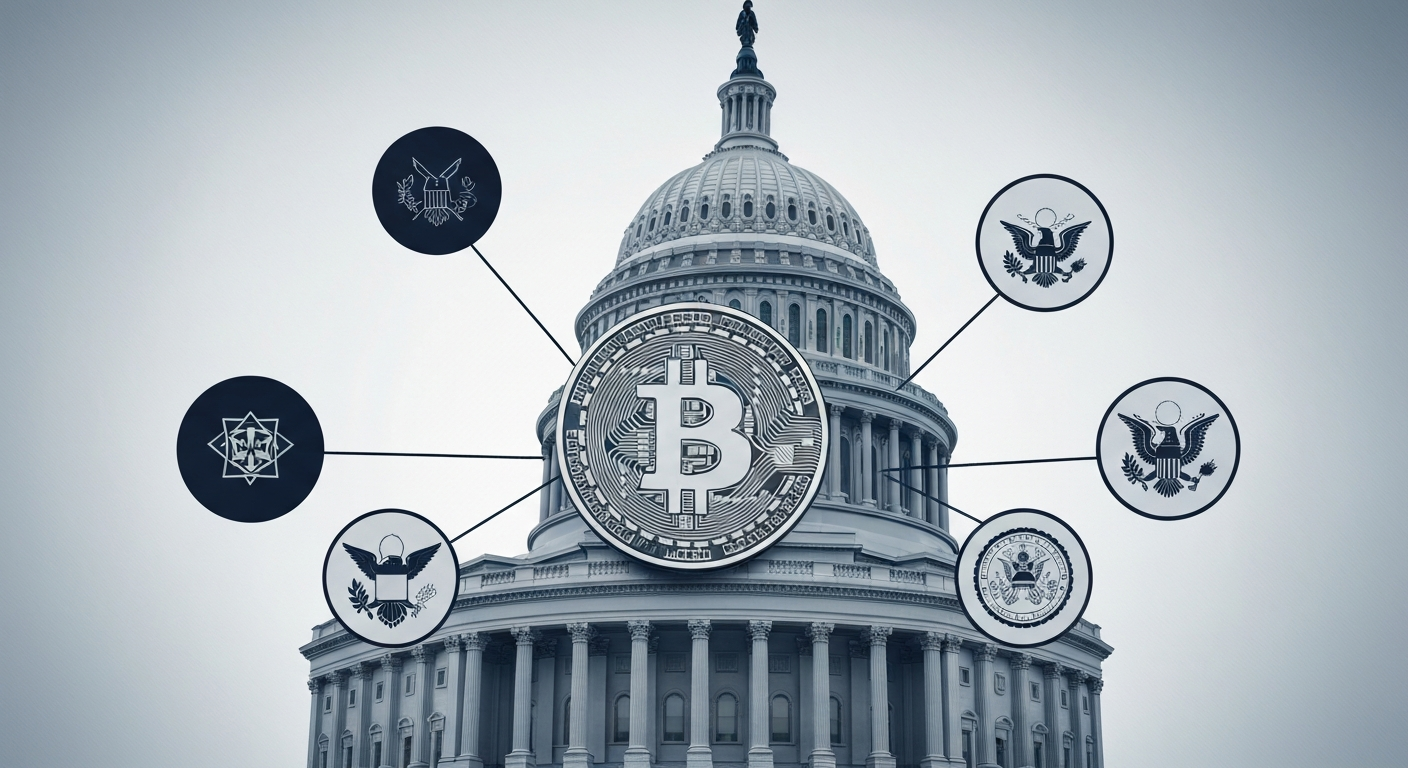
A proposed U.S. Bitcoin reserve faces significant hurdles as multiple federal agencies are reportedly embroiled in a power struggle over its control, according to a recent Bloomberg report. This development surfaces months after White House crypto adviser Patrick Witt publicly stated in May that the administration was actively assessing the legal complexities and implications of establishing such a strategic digital asset holding.
The Push for a National Bitcoin Reserve
The concept of a U.S. government-held Bitcoin reserve has gained traction in certain circles, viewed as a potential strategic asset in an increasingly digitized global economy. Proponents suggest it could offer geopolitical advantages, diversify national reserves, and signal the United States' commitment to innovation in digital finance. Initial discussions, as highlighted by Witt's comments, focused on laying the legal groundwork for managing such a novel federal asset. However, the latest insights from Bloomberg indicate that the path from conceptualization to implementation is now complicated by internal governmental friction. The broader context of the White House's ongoing evaluation of a structure for federal Bitcoin and crypto reserves has been a topic of discussion among policymakers. The White House has been continuously evaluating structures for federal Bitcoin and crypto reserves.
Inter-Agency Control Disputes
The core of the current "snag" appears to be a debate among various federal agencies regarding which entity would hold primary jurisdiction and oversight over a potential Bitcoin reserve. Such a reserve would necessitate clear guidelines for acquisition, storage, security, and potential deployment, all of which fall under the purview of different governmental bodies. This bureaucratic friction, while not uncommon when novel financial instruments intersect with established governmental structures, could significantly delay or even derail efforts to formalize a cohesive national strategy for holding digital assets. The lack of a unified front could also present challenges in developing robust regulatory frameworks for the broader crypto market.
Why it matters
The reported inter-agency debate over a U.S. Bitcoin reserve underscores the broader challenges governments worldwide face in integrating digital assets into national financial strategies. A clear, unified approach is crucial for the United States to establish leadership in the crypto space and avoid fragmented regulation that could stifle innovation or create vulnerabilities. The eventual resolution of this internal conflict will set a significant precedent for how the U.S. government handles future digital asset initiatives, potentially influencing global regulatory trends and the perception of Bitcoin's role as a sovereign asset. This internal struggle highlights the political and institutional hurdles that often accompany the adoption of disruptive technologies.
Key Takeaways
- A proposed U.S. Bitcoin reserve is encountering obstacles due to federal agencies debating control and jurisdiction.
- The information regarding this internal conflict originates from a recent Bloomberg report.
- This development follows White House crypto adviser Patrick Witt's statements in May about examining the legal implications of such a reserve.
- Internal bureaucratic friction could significantly impede the United States' ability to formalize a comprehensive digital asset strategy.
- The outcome of these debates will influence future U.S. government engagement with Bitcoin and the broader crypto market.