At the X Takeover event in Austin, Elon Musk acknowledged that he currently has "no idea how to make chips," yet stated that Tesla and SpaceX will eventually manufacture semiconductors better than incumbent industry leaders. The ambitious push is backed by a $15 billion joint initiative to build the Terafab production facility in Grimes County, Texas.
Custom Equipment and Rapid Design Iterations
During his livestreamed remarks, Musk noted that tours of semiconductor fabs operated by Intel, Samsung, and Taiwan Semiconductor Manufacturing Co. (TSMC) revealed a reliance on standardized equipment from identical suppliers with minimal customization. To disrupt this model, Musk intends to leverage internal engineering expertise from Tesla Automation Germany to build proprietary manufacturing machinery. Addressing his lack of experience, Musk stated, "I don't know how to make chips, to be clear. I have no idea how to make chips. But we'll figure it out... I had no idea how to make cars or rockets as well." He added, "I think probably we'll figure out how to make chips better than anyone. Honestly. I don't know how long it's going to take us to do that. It might take us quite a few years."
While traditional chip developers spend approximately two years moving a single design from draft to volume production, Musk aims to have engineering teams work through roughly 10 chip designs per year, accepting higher failure rates to accelerate innovation. Following his speech on October 11, 2026, Musk issued a public recruitment call on X targeting world-class chip design and production engineers.
The $15 Billion Terafab Venture
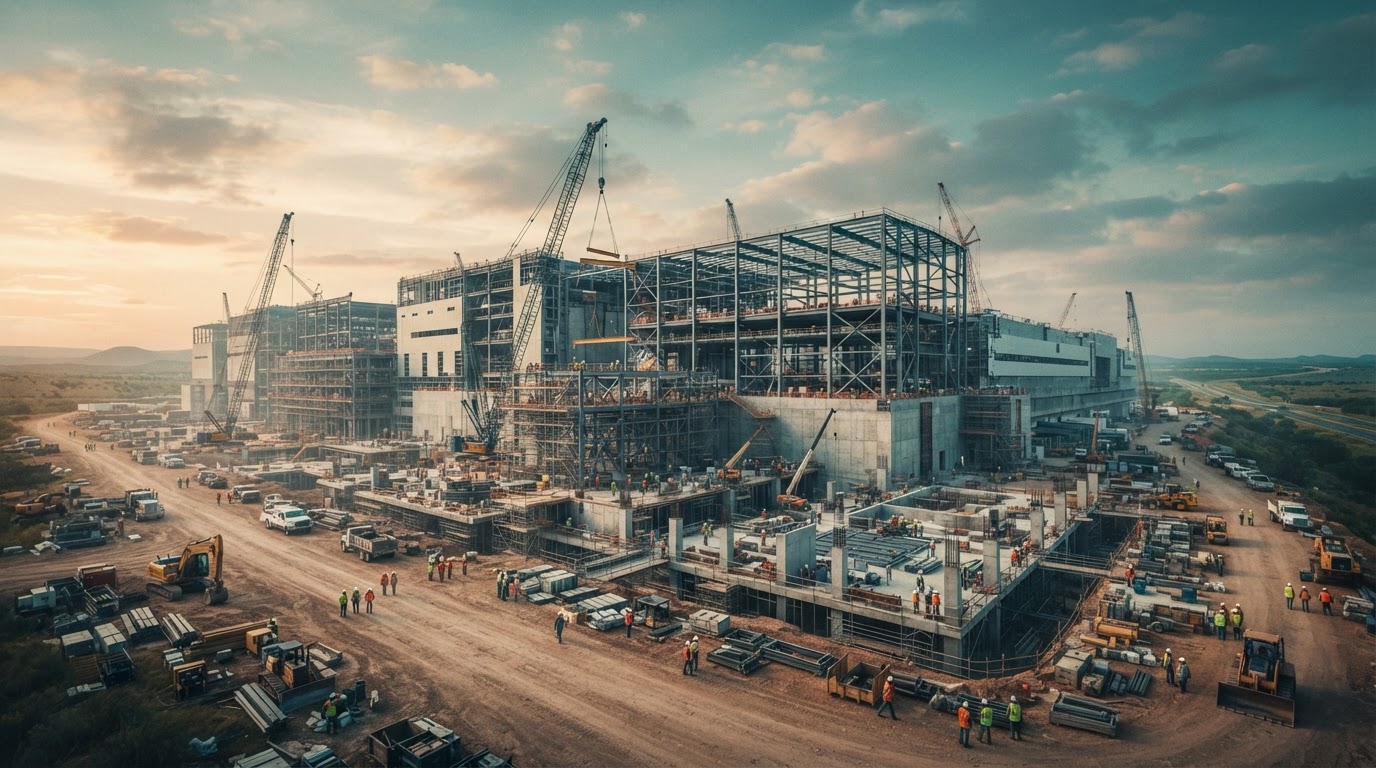
The chipmaking ambition centers on the Terafab facility located in Grimes County, Texas, established as a joint venture between Tesla, SpaceX, and Intel. Supported by a $30 million grant from the Texas Enterprise Fund, the initial $15 billion facility is projected to generate approximately 3,000 jobs. Addressing speculation on X, Musk rejected claims that TSMC would operate or own the site, affirming that his companies intend to run the facility independently. The venture enters a capital-intensive sector where hardware demand continues to reshape technology markets, similar to how advances in memory chip tech and massive AI infrastructure investments are steering high-tech capital expenditures worldwide.
Key Takeaways
- Elon Musk admitted having no initial chip manufacturing knowledge but predicted his companies will outperform existing foundries within a few years.
- Tesla and SpaceX are partnering with Intel on the $15 billion Terafab facility in Grimes County, Texas, backed by a $30 million state grant.
- The internal roadmap targets 10 chip designs per year, drastically exceeding the standard two-year development cycle.
- The Terafab project will create 3,000 jobs and be operated directly by Musk's firms rather than outsourced to TSMC.
Why It Matters
Musk's attempt to apply automotive and aerospace rapid-prototyping methodologies to semiconductor fabrication challenges decades of established supply chain specialization dominated by TSMC and Samsung. If successful, in-house chip production could drastically reduce reliance on third-party foundries for Tesla's autonomous computing hardware and SpaceX's satellite infrastructure. However, semiconductor manufacturing demands extreme physical precision at nanoscale levels, meaning custom machinery alone may not easily bridge the yield-rate and expertise gap honed by traditional foundries over decades.