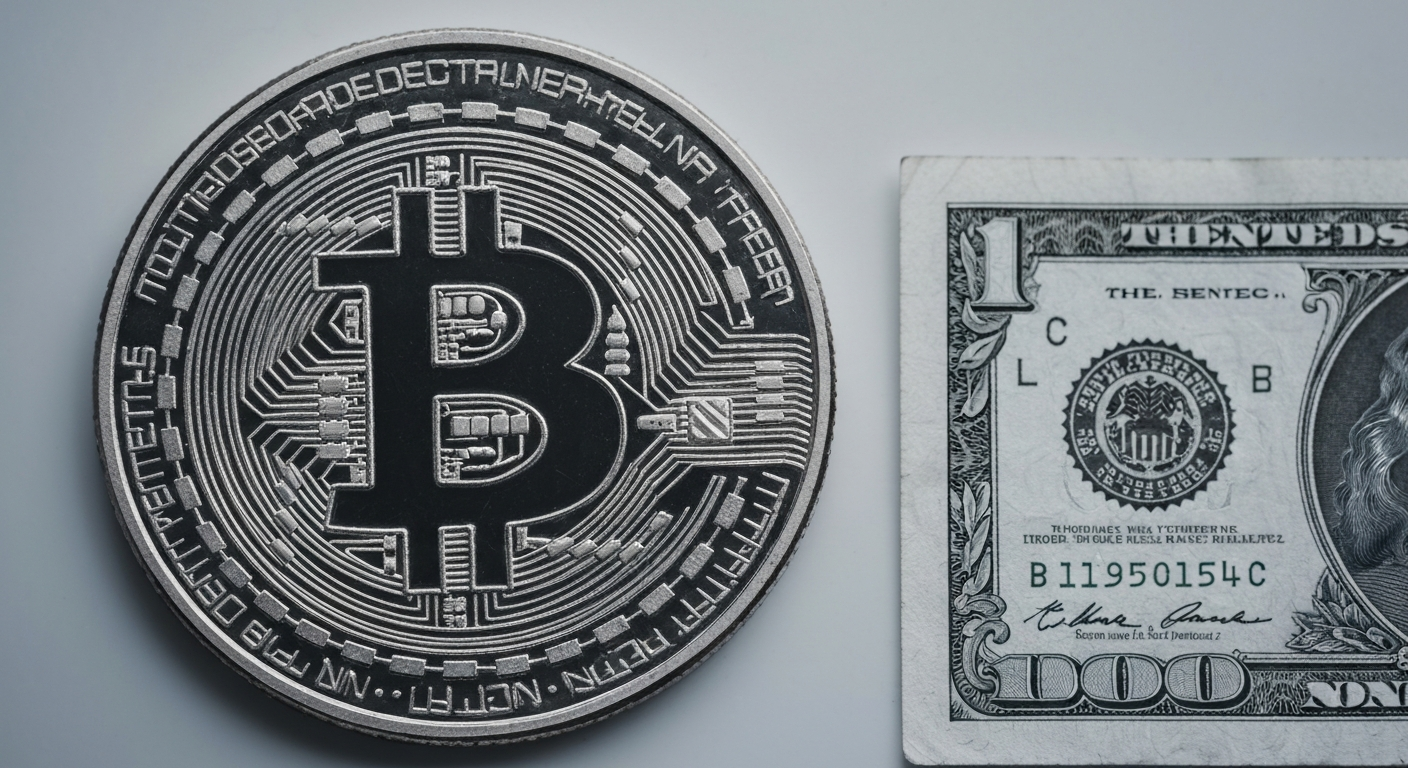
Bitcoin's Sharpe Ratio has fallen to its lowest level since 2022, indicating that investors would have seen better returns from risk-free assets like 10-year U.S. Treasuries over the period. This negative reading suggests that the risk taken by holding Bitcoin was not adequately compensated by its returns.
Understanding the Sharpe Ratio Decline
The Sharpe Ratio is a critical metric in finance, used to evaluate an investment's performance by measuring its risk-adjusted return. It quantifies how much return an investor receives for each unit of risk (volatility) taken. A higher Sharpe Ratio is generally preferred, as it signifies a better return for the amount of risk assumed. Conversely, a negative Sharpe Ratio, as currently observed for Bitcoin, implies that the asset's return was either negative or, more specifically, less than the return of a risk-free asset over the same period. In such a scenario, investors would have been financially better off by choosing a less volatile, risk-free investment, such as government bonds.
This recent dip to a multi-year low for Bitcoin's Sharpe Ratio puts its risk-reward profile into sharp focus. For much of its history, Bitcoin has been known for its significant volatility but also for periods of explosive growth that often compensated for that risk. However, the current data suggests a phase where the risk has outweighed the reward when compared to benchmark safe-haven assets.
Investment Implications and Market Context
The implication of Bitcoin's underperformance against risk-free assets is significant for portfolio allocation strategies. Investors, particularly institutional ones, often rely on metrics like the Sharpe Ratio to make informed decisions about where to deploy capital. When a high-risk asset like Bitcoin fails to deliver returns commensurate with its volatility, it can prompt a re-evaluation of its role within a diversified portfolio. This comes at a time when the broader crypto market has experienced fluctuating sentiment, with Bitcoin recently nearing $63.5K before facing reversals, and some veteran traders even considering swapping Bitcoin for gold, another traditional safe-haven asset.
Why it matters
This decline in Bitcoin's Sharpe Ratio highlights a crucial shift in its short-term investment appeal, particularly for institutional investors and those prioritizing risk-adjusted returns. While Bitcoin's long-term value proposition as a digital store of value or hedge against inflation remains a subject of ongoing debate, its current performance against risk-free assets could lead to capital reallocation away from the digital asset in the short to medium term. Investors will be closely watching if Bitcoin can regain a positive risk-adjusted return profile, especially as global economic conditions, interest rate policies, and overall market sentiment continue to evolve.
Key Takeaways
- Bitcoin's Sharpe Ratio has fallen to its lowest point since 2022.
- A negative Sharpe Ratio means investors would have earned more from risk-free assets.
- 10-year U.S. Treasuries are cited as a superior alternative during this period.
- The metric suggests that Bitcoin's risk was not adequately compensated by its returns.
- This trend raises questions about Bitcoin's short-term appeal for risk-averse investors.