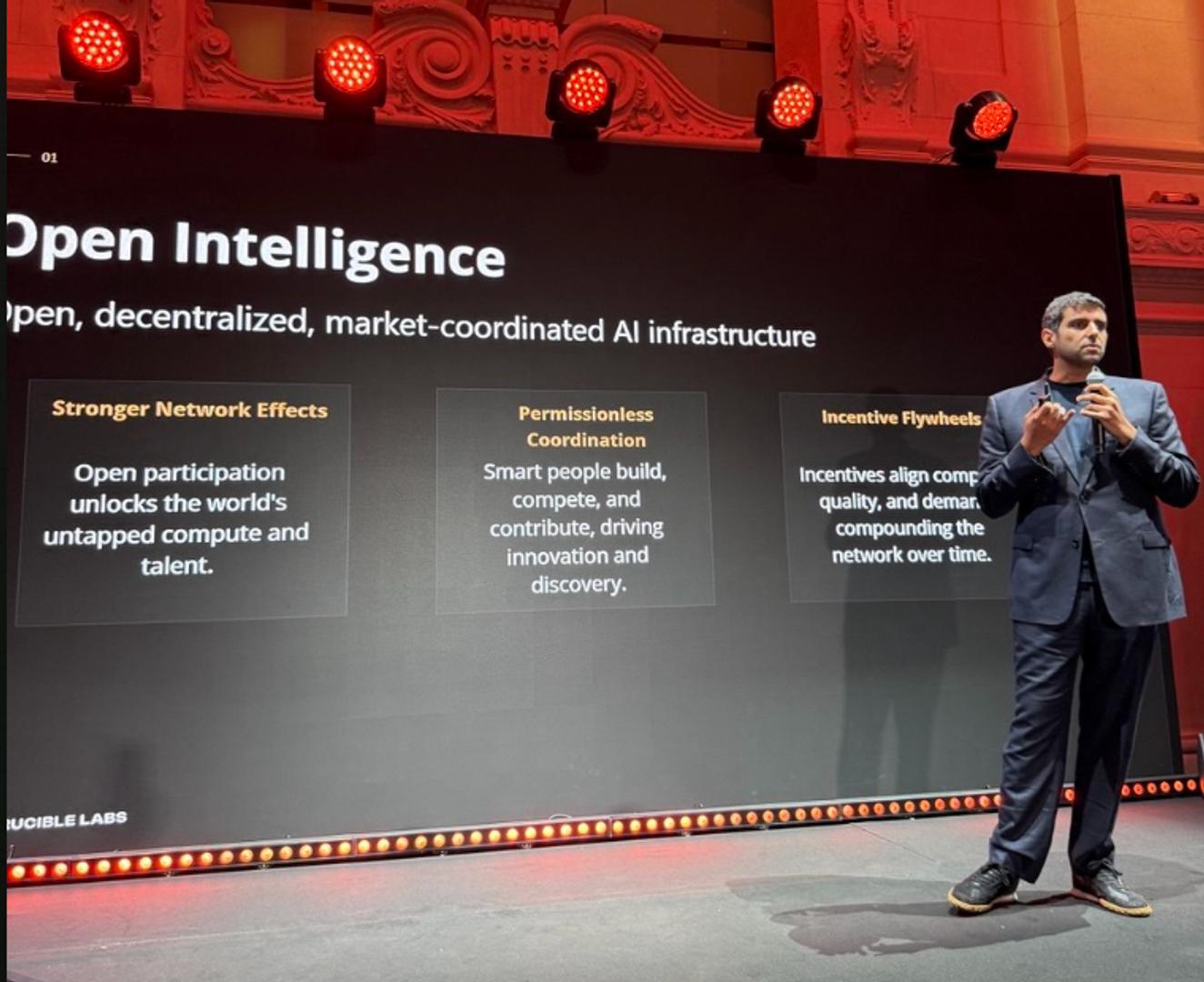
Bitcoin's massive global network possesses a computational power that dwarfs even the most advanced supercomputers, a fact highlighted by Ala Shaabana, co-founder of Bittensor. Shaabana emphasized that the Bitcoin network's ability to process data is an astonishing 600,000 times greater than the combined power of the world's top 100 supercomputers. This incredible distributed processing capability offers a blueprint for a future where artificial intelligence (AI) development could be decentralized, effectively challenging the dominance of large corporations in the AI space.
Unpacking Bitcoin's Computational Might
The sheer scale of Bitcoin's hash rate, the total computational power dedicated to processing transactions and securing the network, is often underestimated. While supercomputers are powerful centralized machines, Bitcoin's strength lies in its vast, distributed network of miners across the globe. Each miner contributes their computing resources, collectively forming a formidable processing entity. This decentralized model ensures security, resilience, and a level of computational power that no single entity or even a cluster of supercomputers can match.
Shaabana's assertion underscores a fundamental difference in architecture. Traditional supercomputing relies on concentrated power, whereas Bitcoin leverages a global, permissionless, and incentive-driven system. This distinction is crucial when considering the future of technologies like AI, which demand immense computational resources. The ability of a decentralized network to outperform centralized behemoths suggests a powerful alternative paradigm for technological progress.
Decentralizing AI with Crypto Principles
The vision put forth by Shaabana and Bittensor proposes applying Bitcoin's "coordinate-and-reward" playbook to the realm of artificial intelligence. In essence, this means creating a decentralized network where individuals and entities contribute computational power and data to train AI models, and are subsequently rewarded for their contributions. This mirrors how Bitcoin miners are compensated for securing the network. Such a system could democratize AI development, moving it away from a few powerful tech giants and into the hands of a global community.
Imagine a future where AI models are not exclusively trained on proprietary datasets and controlled by a handful of companies, but are instead developed collaboratively by a global network. This approach could foster greater transparency, reduce bias, and accelerate innovation by leveraging diverse contributions. The parallel to Bitcoin's ethos of decentralization is clear: just as Bitcoin offers a distributed alternative to centralized finance, a decentralized AI network could offer a distributed alternative to centralized AI development. The concept of leveraging distributed computing for AI is gaining traction, with some Bitcoin miners even beginning to pivot their operations towards AI applications, as seen with Hive Digital's move into AI data centers.
Challenging Corporate AI Monopolies
The current landscape of AI development is heavily dominated by a few major tech companies like Google, Microsoft, and OpenAI. These entities possess vast financial resources, talent pools, and, crucially, immense computational infrastructure. This concentration of power raises concerns about control, censorship, and the potential for biased or monopolistic AI systems. Shaabana believes that a decentralized AI model, inspired by Bitcoin, offers a viable pathway to break these emerging monopolies.
By distributing the computational effort and incentivizing participation, a decentralized AI network could create a more competitive and open ecosystem. This would not only level the playing field for smaller developers and innovators but also ensure that the benefits and control of advanced AI are more broadly shared. The potential for such a system to disrupt the current corporate dominance of AI is significant, offering a future where innovation is driven by collaboration rather than corporate competition. We've seen similar efforts in the decentralized computing space, with projects like Titan Network securing major tech partners for crowdsourced AI.
Key Takeaways
- Bitcoin's network possesses 600,000 times more computational power than the top 100 supercomputers.
- Ala Shaabana of Bittensor advocates for applying Bitcoin's "coordinate-and-reward" model to AI.
- This decentralized approach aims to break corporate monopolies in AI development.
- It could lead to more open, transparent, and collaboratively developed AI systems.