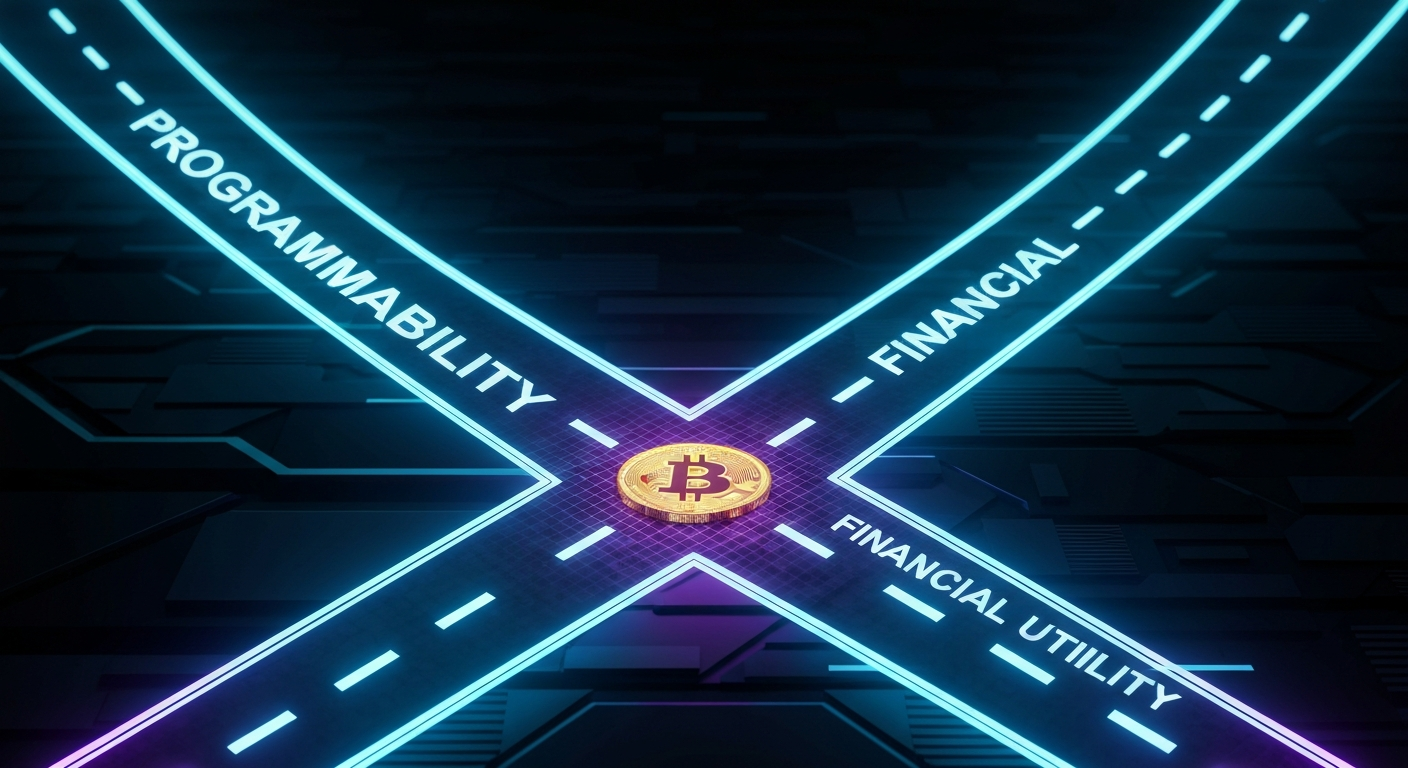
The ongoing evolution of the Bitcoin network has sparked a significant debate among developers and enthusiasts: are users primarily seeking more sophisticated financial applications built on Bitcoin, or a broader spectrum of programmable functionalities?
This discussion gained renewed urgency following the recent shutdown of Botanix, a project that aimed to create a Bitcoin layer-2 solution. The cessation of its operations has prompted a critical examination within the Bitcoin ecosystem, raising questions about the actual demand for highly programmable Bitcoin features versus more straightforward services like borrowing, lending, and yield generation.
The Dual Paths of Bitcoin Innovation
For years, the Bitcoin community has explored ways to extend the blockchain's capabilities beyond its primary function as a secure store of value. Layer-2 solutions are designed to enhance scalability and introduce new features without altering Bitcoin's foundational security. However, the market's response to these innovations has been varied.
Some projects focus on enabling complex smart contracts and decentralized applications (dApps) directly on or connected to Bitcoin. The vision is to transform Bitcoin into a more versatile platform, akin to other programmable blockchains. Yet, adoption for these highly technical applications has sometimes lagged behind expectations.
Conversely, a significant portion of user interest has gravitated towards financial primitives. These include platforms that allow users to leverage their Bitcoin holdings for various financial activities, often replicating traditional finance services in a decentralized manner. This suggests a strong market pull towards practical, yield-generating opportunities rather than abstract programmability.
Challenges and Market Realities
Developing Bitcoin layer-2s is inherently complex, requiring significant technical expertise and robust security measures to interact with the world's most secure blockchain. Projects often face hurdles in achieving widespread adoption and proving their economic viability. The shutdown of Botanix underscores that even well-intentioned projects can struggle to find a sustainable footing if their offerings don't align with immediate market needs.
Key challenges for Bitcoin layer-2 projects include:
- Security Integration: Ensuring that layer-2 solutions maintain Bitcoin's stringent security standards.
- User Experience: Creating interfaces and processes that are accessible and easy for a broad user base.
- Economic Viability: Generating sufficient demand and revenue streams to sustain development and operations.
- Developer Adoption: Attracting and retaining developers to build applications on their specific layer-2 framework.
The market's preference appears to lean towards solutions that offer tangible financial benefits, such as enhanced liquidity or passive income opportunities, rather than purely innovative technological capabilities without clear economic incentives. While Bitcoin continues to establish meaningful floors in the market, its development trajectory is heavily influenced by what users actually do with their BTC.
The Road Ahead for Bitcoin's Future
The debate surrounding Bitcoin layer-2s is not about whether innovation should occur, but rather about its optimal direction and priorities. Projects exploring advancements like OP_CHECKTEMPLATEVERIFY (CTV) continue to push the boundaries of what's possible, showcasing the network's adaptability.
Ultimately, the success of future Bitcoin layer-2 initiatives will likely hinge on their ability to strike a balance between groundbreaking technological advancements and meeting the practical, financial demands of a growing user base. The market is sending a clear signal: utility and clear value propositions are paramount.