The artificial intelligence sector must reach $6 trillion in annual revenue by 2031 to fund its burgeoning computing demands, leaving an unfunded $4.2 trillion gap that existing products cannot cover, according to Bain & Company's 7th annual Global Technology Report released on Tuesday. Existing products are expected to generate only up to $1.8 trillion, requiring massive commercial breakthroughs to sustain ongoing infrastructure buildouts.
Soaring Data Center Expenditures and Hyperscaler Commitments
Bain estimates that annual AI infrastructure spending—covering new data centers, computing hardware, and upgrades for graphics processing units, memory, and networking equipment—will top $1.5 trillion by 2031. Assuming capital expenditure remains at roughly 25% of overall industry revenue, the total AI market must approach $6 trillion annually to remain economically viable.
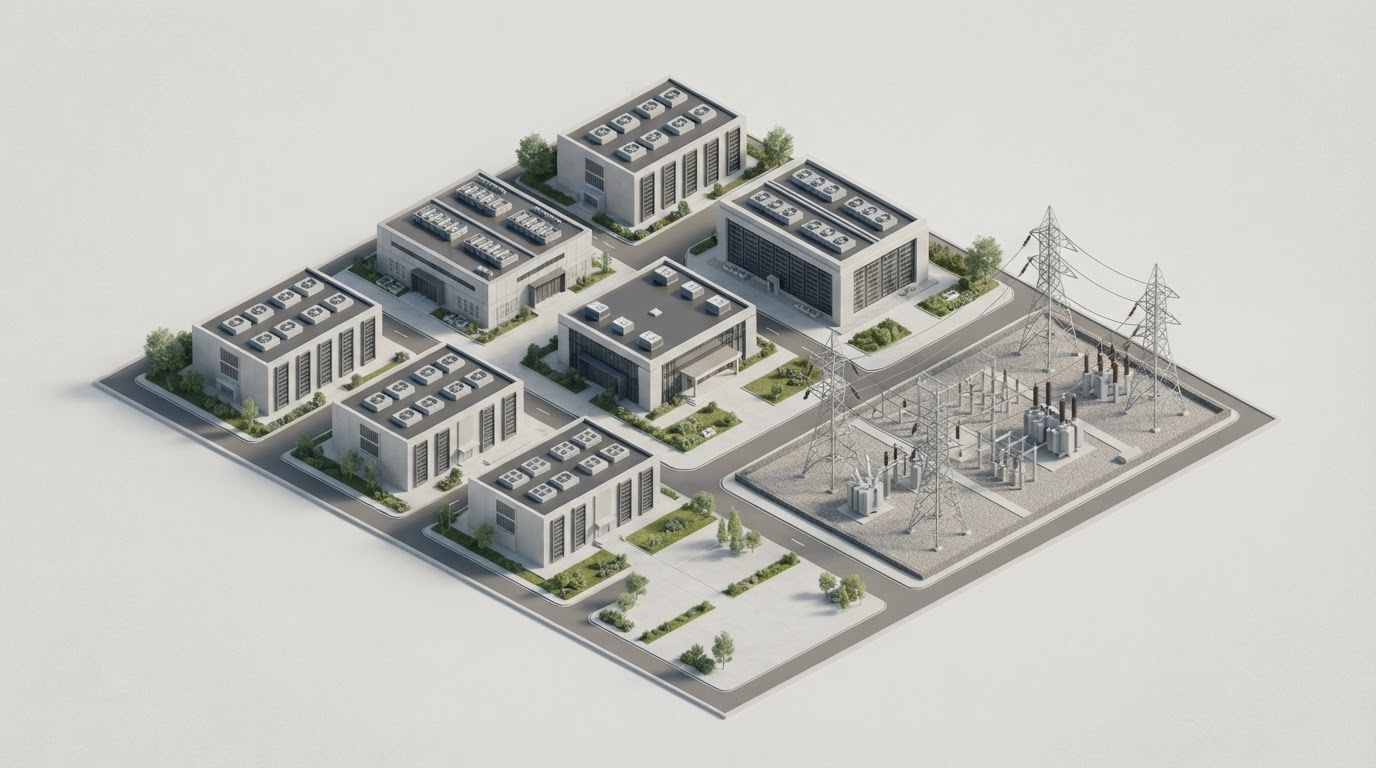
Major tech hyperscalers including Microsoft, Google, Amazon, Meta, and Oracle are projected to spend $780 billion in capital expenditure in 2026 alone, nearly five times their investment level from three years prior. This spending surge comes as individual facilities scale rapidly; leading data centers currently near 1 gigawatt (GW) of power capacity and are on track for 2 GW by 2027, with 9 GW campuses expected by 2030. Data from Epoch AI indicates that data center capacity and costs are doubling every 12 to 16 months. These compounding expenses mirror broader tech scaling demands, similar to Anthropic's massive compute projections.
Potential Revenue Drivers to Close the Deficit
To bridge the $4.2 trillion shortfall, Bain projects that consumer subscriptions and advertisements could yield $200 billion to $400 billion by 2031, while enterprise software and customer service tools might add $1 trillion to $1.4 trillion.
Key takeaway figures highlight where the remaining capital must originate:
- Chatbot and Search Ads: Ad placement in conversational AI tools could unlock $100 billion to $200 billion or more for model builders.
- Autonomous Fleet Tech: Self-driving cars, trucks, delivery drones, and industrial automation represent a $400 billion market opportunity.
- Physical AI & Robotics: Hardware applications, including digital twins and advanced robotics, could generate $900 billion, though high-profile figures remain cautious regarding market adoption, as highlighted in Mark Cuban's warnings on humanoid robotics.
- Novel Applications: Breakthroughs in rare disease drug discovery, continuous mental health assistance, and materials science are expected to fill the remaining void.
Why It Matters
David Crawford, chairman of Bain's global Technology practice, emphasized that efficiency gains alone will not resolve the industry's financial gap. Because infrastructure is being constructed well ahead of real-time demand, funding the expansion sustainably will require adding roughly 1% to the annual global gross domestic product growth rate. If enterprise adoption and physical AI solutions stall over the coming decade, tech hyperscalers risk severe capital misallocation and margin compression.