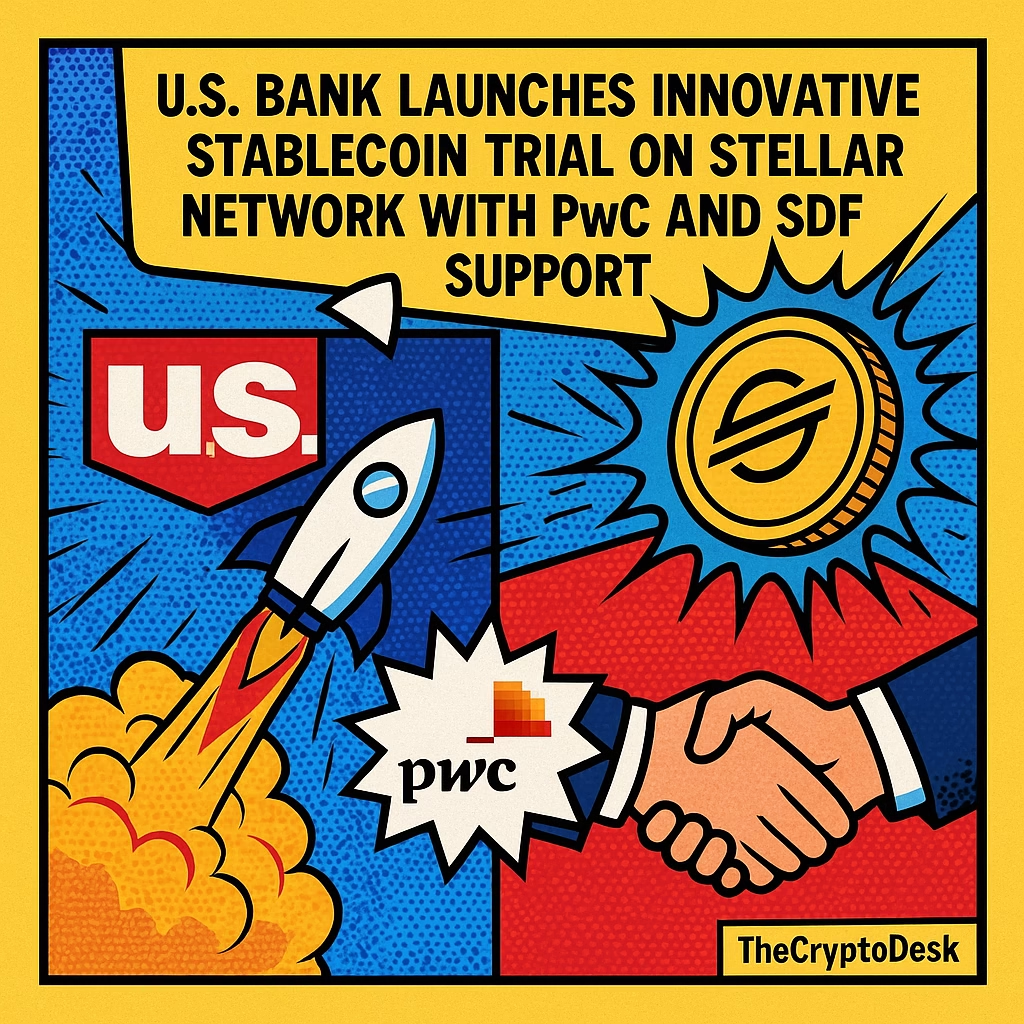
In a groundbreaking move that’s making waves in the financial sector, U.S. Bank has initiated testing of custom stablecoin issuance on the Stellar blockchain. This shift highlights a significant evolution in the banking landscape, as one of the largest U.S. financial institutions embraces the potential of programmable digital currencies. Could we be on the brink of a financial revolution?
.@usbank is testing custom stablecoin issuance on the Stellar network. Real infrastructure testing for regulated deposit tokens — the kind that could reshape how banks move money. Here’s what’s happening.https://t.co/C7sqTIDJZF pic.twitter.com/ZFXC5Q1a49— Stellar (@StellarOrg) November 25, 2025
This innovative development was unveiled on U.S. Bank’s Money 20/20 podcast, aptly titled “The Tokenized Future of Banking.” During this episode, leaders from U.S. Bank, the Stellar Development Foundation (SDF), and PricewaterhouseCoopers (PwC) delved into how tokenization is set to redefine the financial services sector. The message was clear: financial institutions are increasingly looking to integrate programmable money—digital assets designed with the compliance and security features expected by traditional banking systems.
So, why did U.S. Bank select Stellar for this ambitious project? Mike Villano, the Senior Vice President and Head of Digital Asset Products at U.S. Bank, shed some light during the podcast. He emphasized that ensuring safety and control is paramount when introducing tokenized assets into the banking ecosystem. “For bank customers, we have to think about protections around know-your-customer, the ability to unwind transactions, the ability to claw back transactions,” Villano explained. “One of the great things about the Stellar platform, as we conducted our research and development, was learning that they provide the foundational ability to freeze assets and unwind transactions,” he added.
Stellar’s infrastructure is thoughtfully designed for the seamless issuance of assets and efficient money transfers. It boasts an impressive 99.99% uptime over a decade, lightning-fast settlement times of 3-5 seconds, and incredibly low transaction costs, only a fraction of a cent per transaction. Such reliability is essential for institutions like U.S. Bank, which handles substantial amounts of consumer funds.
José Fernández da Ponte, President and Chief Growth Officer at Stellar, also weighed in on the significance of institutional confidence in the Stellar network. “When you are deploying mission-critical systems in financial services, especially when you’re handling consumers’ money, it’s vital that your blockchain remains operational,” he stated. “We are deeply honored by the trust placed in us by U.S. Bank and our partners at PwC. We take that responsibility very seriously.”
However, the broader implications of stablecoins and their rapid growth cannot be overlooked. Recently, the European Central Bank (ECB) issued a cautionary report regarding the swift rise of stablecoins, pointing out potential financial stability risks. While their presence in the euro area remains modest, the report indicates that the interconnectedness with global markets is intensifying.
According to the ECB’s findings presented in the report titled Stablecoins on the rise: still small in the euro area, but spillover risks loom, the total market capitalization of all stablecoins has soared past $280 billion, marking a significant 8% share of the entire crypto-asset market. Dominating this space are two major U.S. dollar-pegged stablecoins, Tether (USDT) holding an astonishing $184 billion and USD Coin (USDC) with $75 billion, showcasing their substantial influence in the market.
As U.S. Bank ventures deeper into the world of digital currencies through its stablecoin initiative, it not only sets a precedent for other financial institutions but also invites innovative changes in how banking operates. With the potential to unlock new efficiencies in transactions and enhance customer experiences, the future of banking may indeed be more digital than ever.
In conclusion, as we stand at the intersection of traditional finance and digital innovation, how will this evolving landscape reshape our financial interactions? Is your bank ready for the tokenized future? Join the conversation and share your thoughts!